In today’s marketplace, a product is more than its physical packaging. Customers discover products through websites, marketplaces, social media, retail stores and distributors. Businesses may also manage the same products across multiple locations and sales channels.
In such an environment, a clear and unique product identity can make product information easier to manage, access and verify.
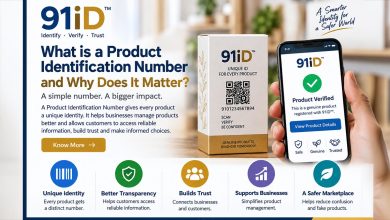
A unique product identity gives a product a specific reference that can distinguish it from other products, variants or records. This is the idea behind 91iD™, an independent Product Identification & Verification Network designed to give registered products a structured digital identity.
What Is a Unique Product Identity?
A unique product identity is a number, code or identifier associated with a particular product or product record.
Instead of identifying a product only by its name, a business can associate it with a specific identification reference.
A Simple Example
Imagine a brand sells the same perfume in three sizes:
- 30 ml
- 50 ml
- 100 ml
The product name may be similar across all three versions, but each variant can have its own product identity.
This makes it easier to distinguish one product record from another.
Why Does a Product Need an Identity?
Products move through several stages before reaching the customer.
Manufacturer → Brand → Distributor → Retailer → Customer
At every stage, product information may need to be recorded, updated or accessed.
A Unique Identity Creates a Common Reference
A structured product identifier can provide a consistent reference for the product throughout these interactions.
It can help connect the physical product with information maintained digitally by the business or identification system.
Unique Identity Helps Businesses Organize Products
Businesses can have dozens, hundreds or even thousands of products.
As the product portfolio grows, identifying products only by names can become difficult.
Product Identity Can Help With
- Product records
- Product variants
- Product information
- Digital product pages
- Business references
- Customer communication
- Product verification
A structured identification system can therefore become part of a broader product information management process.
Unique Identity Helps Distinguish Product Variants
Many products have multiple versions.
For example:
Cosmetic: Different shades
Perfume: Different sizes
Electronics: Different models
Food: Different pack sizes
Clothing: Different sizes or variants
One Name Does Not Always Mean One Product
Two products can have similar names while having different specifications.
A unique identifier gives each applicable product or variant a separate reference, reducing the possibility of confusion.
Unique Identity Connects Physical and Digital Products
A physical product exists in the real world.
Its information may exist digitally.
A product identifier can provide a connection between these two.
The Basic Concept
Physical Product → Unique ID → Digital Product Record
When a customer enters or scans the relevant identifier, the identification system can provide access to the available information associated with that product record.
This is particularly useful as businesses increasingly combine physical products with digital experiences.
Unique Identity Can Help Customers
Product identification is not only a business requirement.
Customers also benefit from having a clear reference for a product.
Customers May Want to Know
- What product is this?
- Which brand is associated with it?
- Which business registered it?
- What product information is available?
- Does the displayed information correspond with the product?
A structured product identity can provide another way for customers to access and review available information.
How 91iD™ Provides a Product Identity
91iD™ is designed as an independent Product Identification & Verification Network.
Its defined numbering architecture uses a 13-digit product identification format:
91 | Company ID | Product ID | Check Digit
Example
91 | 1234567 | 001 | 4
The components are:
- 91 = Country Code
- 1234567 = Company ID
- 001 = Product ID
- 4 = Check Digit
This structure provides a defined identity framework for registered businesses and products within the 91iD™ network.
A Unique Number Can Create Better Product Clarity
Imagine a business has 500 products.
Product names can change. Packaging can be redesigned. Product descriptions can be updated.
The Product Identity Can Remain the Reference
A structured product identifier can provide a stable reference to help connect the product with its relevant record.
This can be useful when businesses maintain product information across different digital and physical channels.
Unique Product Identity and Customer Trust
Trust in a marketplace depends on many factors, including product quality, business reputation, seller reliability and accurate information.
Product identification is only one part of this picture.
Identification Supports Transparency
When customers can identify a product and access information associated with it, they have another source of information to consider before making a purchase.
However, a product identifier alone does not guarantee product authenticity, quality or safety.
Those matters may require additional checks, certifications, warranties, seller verification and other evidence.
Product Identification vs Product Authentication
These terms should not be confused.
Product Identification asks:
Which product is this?
Product Authentication asks:
Can this physical product be established as genuine based on available evidence?
Why This Distinction Matters
A product may have a valid identification number while authenticity still requires additional verification.
91iD™ focuses on product identification and verification of registered product information.
A successful 91iD™ verification should therefore not automatically be interpreted as conclusive proof that a physical product is genuine.
Unique Identity and E-Commerce
Online shopping has made product information more important than ever.
Customers may purchase products without physically seeing them before placing an order.
Digital Product Information Becomes Valuable
A product identity can provide a structured reference that connects the physical product to information available online.
This can help businesses present product information more consistently across their digital channels.
Unique Identity Can Support Small Businesses
Large companies are not the only businesses that need product identification.
Small and growing businesses can also have multiple products, sizes and variants.
A Structured System Can Grow With the Business
As the number of products increases, having an organized identification structure can make product management easier.
91iD™ is designed to support businesses of different sizes through a structured product identification approach.
Unique Identity Can Work Alongside Barcodes
A unique product identity does not necessarily mean abandoning existing barcode systems.
Businesses may already use established barcode standards such as EAN-13 for retail and supply-chain purposes.
Different Systems Can Serve Different Purposes
A barcode can provide machine-readable product identification for compatible scanning environments.
A digital identification and verification network can provide an additional route to associated product information.
91iD™ is designed to operate as an independent identification and verification layer alongside existing systems.
What Happens Without Clear Product Identification?
Without a structured identification approach, businesses may face challenges when managing products with similar names or multiple variants.
Common Sources of Confusion
- Similar product names
- Different pack sizes
- Multiple product variants
- Product model changes
- Different packaging
- Multiple sales channels
- Large product catalogues
A unique product identity can provide an additional reference point for distinguishing products.
Who Benefits From a Unique Product Identity?
A well-structured product identity can be useful across the product ecosystem.
Manufacturers
Manufacturers can maintain clear identities for registered products.
Brands
Brands can connect product identities with available digital product information.
Distributors
Distributors can use product identities as an additional product reference.
Retailers
Retailers can benefit from clearer product identification when handling different products and variants.
Customers
Customers can use available identification and verification facilities to access product information.
The Future of Product Identity
The relationship between physical products and digital information is becoming increasingly important.
Customers want information.
Businesses need organization.
Digital commerce needs structured product data.
A Product Identity Creates the Connection
The concept is simple:
One Product → One Clear Identity → Connected Information
This does not replace existing business processes. Instead, it can provide another layer for organizing and communicating product information.
Why 91iD™ Matters
91iD™ is built around a straightforward principle:
Every registered product should have a clear identity.
The objective is to make product identification simple, structured and accessible while providing a verification pathway for available product information.
The 91iD™ Philosophy
Identify. Verify. Trust.
A unique identity is the first step.
Accessible information is the next.
An informed customer is the ultimate goal.
Frequently Asked Questions
What is a unique product identity?
A unique product identity is a number, code or identifier associated with a particular product, product variant or product record.
Why is a unique product identity important?
It can help businesses distinguish products, organize product information and provide customers with a clear product reference.
Does every product legally require a unique product ID?
Requirements vary by product category, market and applicable regulations or standards. Businesses should follow the identification, labeling and regulatory requirements applicable to their products.
Is a product ID the same as a barcode?
No. A product ID is an identifier, while a barcode is a machine-readable representation that can encode an identifier or other information.
Is 91iD™ the same as EAN-13?
No. EAN-13 is an established GS1 trade-item identification standard. 91iD™ is an independent Product Identification & Verification Network with its own defined numbering structure.
Can a product have both EAN-13 and 91iD™?
A business can use both systems for different purposes, depending on its product, operational and identification requirements.
Does a 91iD™ number prove that a product is genuine?
No. A 91iD™ number identifies a registered product record and enables verification of available information. It should not by itself be considered conclusive proof of physical authenticity.
Can customers verify a 91iD™ product?
Yes. Where verification is available, customers can scan or enter the 91iD™ identification and review the product information associated with the registered record.
Conclusion
A product may be physical, but its identity can be digital.
As businesses expand across retail stores, websites, marketplaces and distribution networks, a structured product identity can make it easier to distinguish products and connect them with relevant information.
For customers, it can provide another reference when reviewing a product before making a purchase.
For businesses, it can support more organized product information and customer communication.
91iD™ is built to provide this independent product identity layer through a structured Product Identification & Verification Network.
One Product. One Identity. Better Information.
91iD™
Identify. Verify. Trust.
Visit www.91id.in to learn more.